|
|
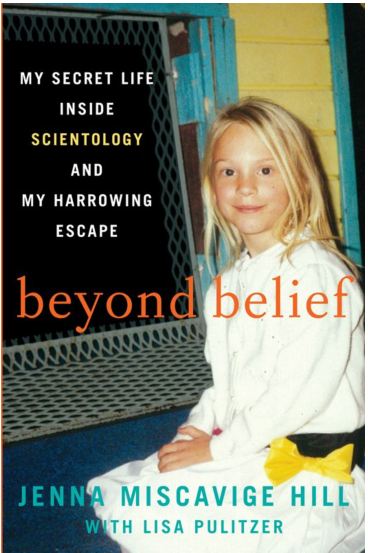 We’ve just finished Jenna Miscavige Hill’s memoir, Beyond Belief: My Secret Life Inside Scientology and My Harrowing Escape, and we can say that it packs a powerful punch in its final pages as the niece of Scientology’s leader considers his behavior and its effect on her life, both in and out of the church. We’ve just finished Jenna Miscavige Hill’s memoir, Beyond Belief: My Secret Life Inside Scientology and My Harrowing Escape, and we can say that it packs a powerful punch in its final pages as the niece of Scientology’s leader considers his behavior and its effect on her life, both in and out of the church.
Along the way, we get one of the most complete and compelling narratives of how someone grows up in, and falls under the spell of, this organization which wields so much power over its members through interrogation, intimidation, and control. And behind it all is one rather diminutive man, David Miscavige, who comes off as a meddling, tyrannical, but ultimately cowardly man who Jenna and other ex-Scientologists are determined to expose. “To me, the Church is a dangerous organization whose beliefs allow it to commit crimes against humanity and violate basic human rights. It remains a mystery to me how, in our current society, this can go on unchecked. It is particularly insidious because of its celebrity advocates and affiliated groups, such as Narconon, Applied Scholastics, and the Citizens Commission on Human Rights,” she writes. “The problem is that Scientology is a system that makes it nearly impossible for you to think for yourself. People like my uncle are enablers who create an environment of fear that discourages independent thought. Get rid of them and you would continue to have a system that, almost by definition, restricts individual freedoms.” Continue reading Jenna Miscavige Hill on her Uncle, Scientology’s Leader: A Bully Too Afraid to Show His Face Advertisement
 We received our copy of Jenna Miscavige Hill’s new book at 3 am and we’re still devouring it. We hope to have our review up later today. We received our copy of Jenna Miscavige Hill’s new book at 3 am and we’re still devouring it. We hope to have our review up later today.
For now, the niece of Scientology leader David Miscavige is scheduled to make an appearance on The View today on ABC at 11 am Eastern. We’d like to hear your thoughts on the questions she’s asked and how she responds. Tune in and sound off! Continue reading Jenna Miscavige Hill Appearing Today on The View: Comment Here!
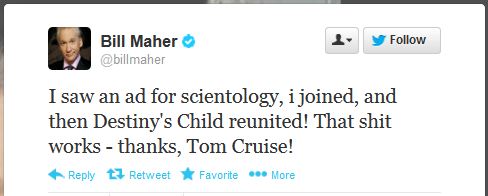
SEE OUR UPDATE AT THE BOTTOM OF THE PAGE Our readers knew that Scientology ad was coming during last night’s Super Bowl, but judging from the reaction at Twitter, most people were shocked when it showed up right after the first half. We’ve run through thousands of the reactions that hit Twitter right after the ad aired, and we’ve pulled together some of the best. In general, Scientology’s attempt to burnish its image didn’t go over too well! Continue reading Best Twitter Reactions to Scientology’s Super Bowl Ad
 NOTE: Live-blog entries show up at the bottom of the page. NOTE: Live-blog entries show up at the bottom of the page.
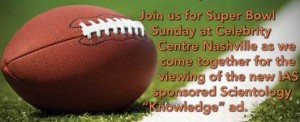
Two weeks ago, Scientology came through on its promise to air its “Knowledge” ad during the AFC Championship — at least in some cities. We saw it here in New York, and it turned out to be a 30-second ad which is also on the web in a 1-minute version. Will the ad also air today during the Super Bowl? We’ll be watching here at the Bunker, and we’d love to hear if you spot the ad in your town as well. In today’s special SUPER SUNDAY edition of Sunday Funnies, we’ll take a quick look at both ads the church has been running lately, and then we have a jam-packed collection of other wacky items for you. Continue reading Super Sunday Funnies: Live-Blogging Scientology’s Super Bowl Ad!
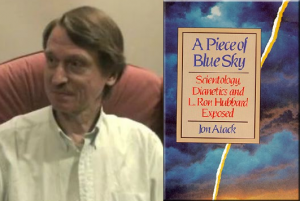 We’re starting a new weekly feature today, and we’re very excited about it. In 1990, author Jon Atack published what is still one of the very best books on L. Ron Hubbard and Scientology, A Piece of Blue Sky. Atack now has a new edition of the book coming out, and it reminded us what an encyclopedic resource he is. So we had an idea. In the world of Scientology watching, we noticed that there seem to be some legends, myths, and contested facts that tend to get hashed and rehashed in books, articles, and especially on the Internet. With Atack’s help, we’re going to tackle these issues one by one, drawing on Jon’s deep knowledge and (who knew?) droll sense of humor. We’re starting a new weekly feature today, and we’re very excited about it. In 1990, author Jon Atack published what is still one of the very best books on L. Ron Hubbard and Scientology, A Piece of Blue Sky. Atack now has a new edition of the book coming out, and it reminded us what an encyclopedic resource he is. So we had an idea. In the world of Scientology watching, we noticed that there seem to be some legends, myths, and contested facts that tend to get hashed and rehashed in books, articles, and especially on the Internet. With Atack’s help, we’re going to tackle these issues one by one, drawing on Jon’s deep knowledge and (who knew?) droll sense of humor.
This week, let’s start out with one of the most iconic photographs of L. Ron Hubbard and settle some facts about its background. Get your alligator clamps ready — it’s time to torture a tomato! Continue reading Scientology Mythbusting with Jon Atack: The Tomato Photo!
Five years after it was first posted to YouTube, the infamous 9-minute Tom Cruise video that was only supposed to be seen by members of the Church of Scientology still seems as nutty as ever. You know the one, the interview Cruise gave to celebrate his winning the “Freedom Medal of Valor,” a special tchotchke made just for him and awarded by Scientology leader David Miscavige in a 2004 celebration. The video was clearly intended to make Cruise’s fellow church members feel warm and fuzzy that the actor was such a hard-core L. Ron Hubbard addict, who shared with them their belief that in the upper levels Scientologists acquire superhuman abilities: “Being a Scientologist, when you drive past an accident, it’s not like anyone else. As you drive past, you know you have to do something about it, because you know you’re the only one that can really help,” Tom said, flexing his OT muscles. Well, talk about another car wreck. Get a load of Cruise’s former assistant, Andrea Doven, talking the Scientology talk as she celebrates finishing a course at the Hollywood Celebrity Centre. As Andrea says, “I emanate power from this org.” Continue reading More Nutty Scientology Talk, Tom Cruise Style: His Former Assistant’s Graduation Ceremony! Advertisement
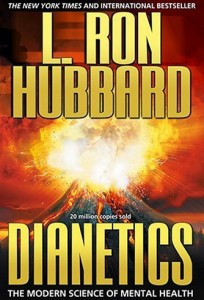 Welcome to our ongoing project, where we blog a 1950 first edition of Scientology’s bible, Dianetics, with the help of ex-Scientologist, Bay Area lawyer, blogger, and author Vance Woodward. Go here for the first post in the series. Welcome to our ongoing project, where we blog a 1950 first edition of Scientology’s bible, Dianetics, with the help of ex-Scientologist, Bay Area lawyer, blogger, and author Vance Woodward. Go here for the first post in the series.
We’re now entering Book Two, which promises to take us into the nuts and bolts of dianetic theory. And it begins with Hubbard describing to us how the human mind works — that it has three divisions, and in this first chapter he is going to explain how the analytical mind works. The analytical mind, he explains, is the “I”. It’s the awareness we have as a self. When we’re conscious and thinking, it’s our analytical mind that is helping us make decisions. And remarkably, the analytical mind works just like an error-free computer, analyzing data stored in massive data banks, never making a mistake. Gosh, that’s a keen idea, and we figure it must have sounded downright spiffy in 1950, when this book came out. Continue reading Blogging Dianetics, Part 5: Your Mind is a 1950s Computer Advertisement
Tomorrow, Ursula Caberta will retire from her post with the Hamburg state government after spending more than 20 years investigating Scientology’s influence in Germany. Yesterday, we had a lengthy telephone conversation with her, and reviewed some of the highlights of her career, which was one of the most troublesome for Scientology in Europe. “I’m done with my work for Hamburg. I’m free to do other things, including finishing my final book on Scientology,” she says. Continue reading Ursula Caberta Retiring: Her Thoughts On Fighting Scientology in Germany for 20 Years
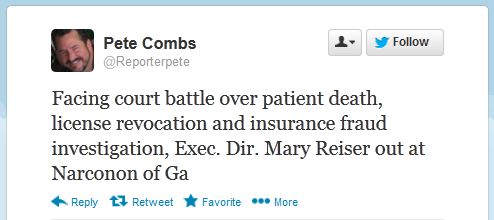
We’ve commented in the past how remarkable it is that some of Atlanta’s local news outlets have banded together to keep a close watch on one of Scientology’s more intriguing messes going on there. Pete Combs of WSB Radio, Jodie Fleischer of WSB-TV, and Christian Boone of the Atlanta Journal-Constitution have coordinated their coverage as a wrongful death and civil racketeering lawsuit has exposed shocking improprieties at Scientology’s drug rehab center in Atlanta, known as Narconon Georgia. With a trial looming, the case has been going terribly for Scientology, and the state has announced its intention to revoke the facility’s license and shut the place down. And last night, Combs tweeted the latest sign that things are going to hell in a handbasket for Scientology leader David Miscavige’s side: Narconon Georgia Executive Director Mary Rieser has apparently lost her position, when she had been doing such an effective job lying like a rug. Advertisement
Continue reading Scientology’s Atlanta Drug Rehab Crumbling: Executive Director Mary Rieser Out
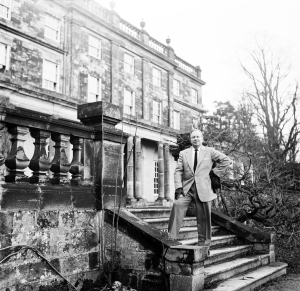 Hubbard, at Saint Hill Manor Just a quick evening post for some blatant self-promotion as we point out a couple of smart news stories that feature quotes from the Bunker. This afternoon, The Observer‘s Dan Duray published an insightful look at the fact-checking process that journalists go through when they investigate the Church of Scientology. Specifically, he talked with Lawrence Wright and his indefatigable researcher, Lauren Wolf, about what they went through trying to get answers from Scientology’s spokeswoman, Karin Pouw. And Dan revealed what we told him: that we haven’t heard directly from Pouw since the Debbie Cook lawsuit last February. Karin, where’s the love? Continue reading More Signs of Scientology’s Armageddon as the Media Take Aim
|









 We’ve just finished Jenna Miscavige Hill’s memoir, Beyond Belief: My Secret Life Inside Scientology and My Harrowing Escape, and we can say that it packs a powerful punch in its final pages as the niece of Scientology’s leader considers his behavior and its effect on her life, both in and out of the church.


![Ursula Caberta [Credit: dpa/DPA]](http://tonyortega.org/wp-content/uploads/2013/01/Ursula_Caberta.jpg)
